
Rental Demand in Wigan: What Tenants Are Looking For in 2026


As the UK rental market continues to recalibrate following regulatory reform, interest rate normalisation, and demographic shifts, regional towns with strong fundamentals are increasingly attractive to both tenants and investors. Wigan is one such location. Sitting within the Greater Manchester commuter belt, Wigan’s rental demand is being driven by affordability, transport connectivity, and evolving tenant expectations.
For investors assessing a UK property investment opportunity in 2026, understanding what tenants actually want rather than relying on outdated assumptions is critical. This article explores the key drivers of rental demand in Wigan, what tenants are prioritising in 2026, and how well-positioned buy-to-let assets are aligning with these trends.
Why Wigan Continues to Attract Tenants
Wigan has quietly strengthened its position as a rental market over the past five years. While larger cities face affordability constraints and oversupply in certain segments, Wigan offers a more balanced dynamic.
Key demand drivers include:
Relative affordability compared to Manchester and Liverpool
Strong rail connectivity to Manchester, Bolton, Preston, and Liverpool
Stable local employment across healthcare, logistics, education, and manufacturing
Growing professional renter base, including key workers and young families
These fundamentals make Wigan a resilient location for buy-to-let in the UK, particularly when assets are designed to meet modern tenant expectations rather than legacy rental standards.
What Tenants Are Looking For in 2026
Tenant behaviour has shifted decisively. Demand is no longer driven purely by price; quality, efficiency, and lifestyle suitability now play a much larger role.
1. Energy Efficiency and Lower Running Costs
Energy performance is no longer optional. With EPC standards tightening and energy costs remaining a concern, tenants actively seek homes that offer:
Improved insulation
Modern heating systems
Double glazing
Efficient layouts that reduce wasted space
Properties that meet or exceed current EPC expectations experience faster letting times and lower void periods an important consideration for investors evaluating UK property investment opportunities.
2. Well-Designed, Practical Living Spaces
Post-pandemic living habits have reshaped priorities. Tenants increasingly value:
Defined living and sleeping zones
Space for home working
Adequate storage
Functional kitchens and bathrooms, rather than oversized but inefficient layouts
In Wigan, demand is particularly strong for well-finished apartments and compact houses that balance affordability with usability.
3. Location and Connectivity
Proximity to transport remains a decisive factor. Tenants prioritise:
Walkable access to rail stations
Reliable commuter routes to Greater Manchester
Nearby amenities such as supermarkets, gyms, and healthcare
Properties positioned close to transport corridors consistently outperform those in poorly connected peripheral areas, regardless of headline rent.
4. Security and Long-Term Rental Stability
Tenants in 2026 are increasingly seeking longer tenancies and stability. Secure buildings, controlled access, and professional management contribute significantly to tenant retention.
From an investor’s perspective, this translates into:
Reduced turnover costs
More predictable income streams
Stronger long-term asset performance
These factors are particularly relevant when structuring a sustainable buy-to-let in the UK strategy.
Project Highlight: Dicconson Terrace, Wigan – Construction Update
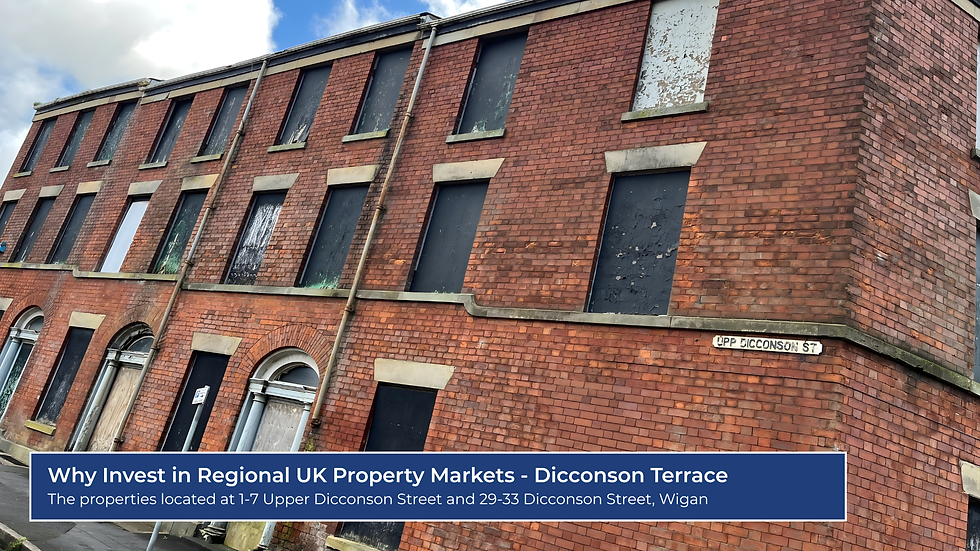
A clear example of how modern rental demand is being addressed in Wigan can be seen at Dicconson Terrace, a purpose-led residential development currently progressing through its construction phase by DBR Investment Group.
Current Progress Update
Dicconson Terrace Construction Update in Wigan Dicconson Terrace Construction Update in Wigan 1 Dicconson Terrace Construction Update in Wigan 2
Construction at Dicconson Terrace continues to move forward in line with the DBR Investment Group project programme, with key structural and internal works now visibly advancing.
The scheme is being delivered with a strong emphasis on:
High-quality internal specifications
Energy-efficient design standards
Practical layouts aligned with tenant demand
Long-term durability rather than short-term cosmetic appeal
This approach reflects a broader shift in successful UK property investment opportunities, where rental assets are designed first and foremost around occupier needs.
Why Dicconson Terrace Aligns with 2026 Rental Demand
The Dicconson Terrace project has been structured to respond directly to the trends shaping rental demand in Wigan by DBR Investment Group:
Location-led demand: Positioned to benefit from Wigan’s transport connectivity and local amenities
Modern living standards: Contemporary interiors, efficient layouts, and upgraded building performance
Rental resilience: Designed for long-term letting rather than speculative resale
For investors, this type of asset offers reassurance that rental demand is not only present today but sustainable over the medium to long term.
Further project details and ongoing updates are available here:
Investor Perspective: Rental-Led Strategy in 2026
As regulation tightens and tenant expectations rise, successful investors are increasingly focused on rental fundamentals rather than headline yields alone.
A strong UK property investment opportunity in 2026 is characterised by:
Stable tenant demand
Assets that meet future compliance standards
Locations with affordability-driven migration
Professional development and management strategies
Wigan continues to meet these criteria, particularly when projects are delivered with a rental-first mindset.
Buy-to-Let in the UK: Why Regional Towns Matter
While prime city centres often dominate headlines, regional towns such as Wigan offer a more balanced risk profile for buy-to-let investors:
Lower entry prices
Broader tenant base
Reduced exposure to oversupply
Stronger alignment with essential housing demand
This is why regional-led UK property investment opportunities are increasingly favoured by experienced investors seeking dependable income rather than speculative growth alone.
Conclusion: Rental Demand in Wigan Is Structural, Not Cyclical
Rental demand in Wigan heading into 2026 is underpinned by structural factors rather than short-term market noise. Tenants are clear about what they want: efficient homes, sensible layouts, good locations, and professional standards.
Projects such as Dicconson Terrace demonstrate how modern developments can align with these expectations while providing investors with reassurance around long-term rental performance.
For those considering buy-to-let in the UK, Wigan remains a compelling example of how regional markets, when approached correctly, can deliver stability, resilience, and sustainable returns.


