
UK Property Development Opportunities: Inside DBR Investment Group’s Approach at Standish Court


For private investors looking beyond traditional buy-to-let, the most attractive UK property development opportunities are often found where there is a clear gap between a property's current condition and its potential value.
But identifying an opportunity is only the beginning.
Successful property development requires due diligence, acquisition expertise, planning and project management, disciplined cost control and a clear exit strategy. It also requires a development partner capable of taking responsibility for turning the opportunity into a completed asset.
Standish Court provides a practical example of this approach.
Rather than simply identifying a property and introducing it to an investor, DBR Investment Group takes a hands-on approach to property development, refurbishment and delivery. This case study looks inside that process and explains how a development opportunity can be assessed, transformed and positioned for investors.
For private investors considering property refurbishment, Standish Court demonstrates the importance of investing not only in the property itself but also in the process and expertise behind its delivery.
From Property Opportunity to Development Strategy
Every successful development begins with understanding what a property can become.
A building may have an attractive location but require substantial refurbishment. Another may have untapped residential potential but need significant work before it can meet modern occupier expectations.
This is where the difference between an estate agent and a developer becomes particularly important.
An agent's role is generally centred around marketing, sales or lettings. A developer's role extends much further: identifying opportunities, assessing feasibility, managing the development process and ultimately creating a completed asset.
At DBR Investment Group, the approach starts with assessing the fundamentals.
For a project such as Standish Court, this means considering factors including:
The property's location and local demand
The existing condition of the building
The potential end use
Refurbishment and development requirements
Expected project costs
Market positioning
Rental or sales potential
The likely investment strategy and exit route
This process helps determine whether an apparent property opportunity can become a commercially viable development.
For investors, that distinction matters.
A discounted property is not automatically a good investment. The opportunity needs to make sense from acquisition through to completion and exit.
Standish Court: Turning Potential into a Deliverable Project
Standish Court represents the type of project where development expertise can create value beyond the original acquisition.
The objective is not simply to improve the appearance of a building. A successful refurbishment should create a property that is functional, attractive to its target market, and commercially positioned for its intended investment strategy.
That requires a structured development process.
The project can be viewed through several key stages:
1. Identifying the Opportunity
The first stage is identifying a property where there is a clear opportunity to add value.
This involves looking beyond the current condition of the building and considering its underlying potential.
For investors, this is an important distinction. The investment case should be based on what can realistically be delivered rather than simply what the property looks like today.
2. Assessing Feasibility
Once an opportunity has been identified, the next step is determining whether the proposed development is achievable.
This involves examining the property's physical condition, development requirements, costs, programme, and potential end value.
A thorough feasibility assessment helps identify potential risks before significant capital is committed.
3. Planning the Refurbishment
Refurbishment is where a development strategy becomes a practical project.
The works need to be properly scoped and sequenced. Materials, contractors, programme requirements and quality standards all need to be considered.
This is particularly important for investors because uncontrolled refurbishment costs can significantly affect a project's financial performance.
DBR Investment Group's approach is therefore focused on understanding the development requirements before progressing through the delivery stage.
4. Managing the Development
The delivery phase is where effective project management becomes critical.
A development involves multiple moving parts, including contractors, suppliers, consultants, compliance requirements, budgets and deadlines.
At Standish Court, DBR Investment Group's involvement as Principal Contractor provides a central point of responsibility for the construction and refurbishment process.
Rather than treating refurbishment as a series of disconnected tasks, the project can be managed as one coordinated development.
What Does a Principal Contractor Bring to a Development?
The role of a Principal Contractor is particularly important on larger refurbishment and construction projects.
The Principal Contractor is responsible for managing the construction phase and coordinating the work undertaken on site, including relevant health and safety responsibilities under the applicable construction framework.
For an investor, this can provide an important layer of professional oversight.
Instead of simply funding a property and relying on multiple independent parties to coordinate the works, investors can benefit from working with a development business that understands the project from acquisition through to delivery.
This integrated approach can help create greater visibility over:
Project scope
Construction activity
Contractor coordination
Programme management
Quality control
Site responsibilities
Development progress
Potential project risks
It does not remove development risk — no property investment can — but strong project management can help identify and manage risks more effectively.
Before and After: Where Value Creation Happens

One of the clearest ways to understand a refurbishment project is to compare the property before and after development.
Before refurbishment, a building can present challenges that make it difficult to compete effectively in the modern property market. Outdated interiors, poor presentation, inefficient layouts, or general deterioration can all affect its appeal.
After refurbishment, the same underlying property can be repositioned for its intended market.
The transformation is not simply cosmetic.
A well-planned refurbishment can improve:
Presentation and first impressions
Functionality
Internal layouts
Occupier appeal
Quality standards
Marketability
Long-term usability
For private investors, this is one of the central principles behind property refurbishment investment: the objective is to identify where targeted investment and professional delivery can improve an asset's overall position.
For a closer look at the physical transformation, see our Standish Court before-and-after case study, which provides additional project imagery and demonstrates the difference between the original property and the completed development.
Why Development Expertise Matters to Private Investors
Investing in property development is fundamentally different from purchasing a completed property.
With a completed property, an investor can assess the existing asset, market conditions, and income potential.
With a development, there is another layer of execution risk.
The finished asset has to be created.
That means the investor needs confidence not only in the underlying property opportunity but also in the team responsible for delivering the project.
This is why DBR Investment Group's development model focuses on more than sourcing.
The company can bring together acquisition, development, refurbishment and project delivery expertise, allowing investors to participate in opportunities where the value-creation process is clearly defined.
For private investors, this can be particularly relevant when evaluating opportunities based on:
1. The underlying property
Is there a genuine opportunity to improve or reposition the asset?
2. The development strategy
Is there a clearly defined plan for creating the intended end product?
3. The delivery team
Does the development team have the capability to manage the refurbishment and construction process?
4. The financial case
Do the projected costs, values, income assumptions, and exit strategy support the investment thesis?
5. Risk management
What are the major development risks, and how are they being identified and managed?
These questions should form part of any serious investment due diligence process.
From Refurbishment to Investor Exit
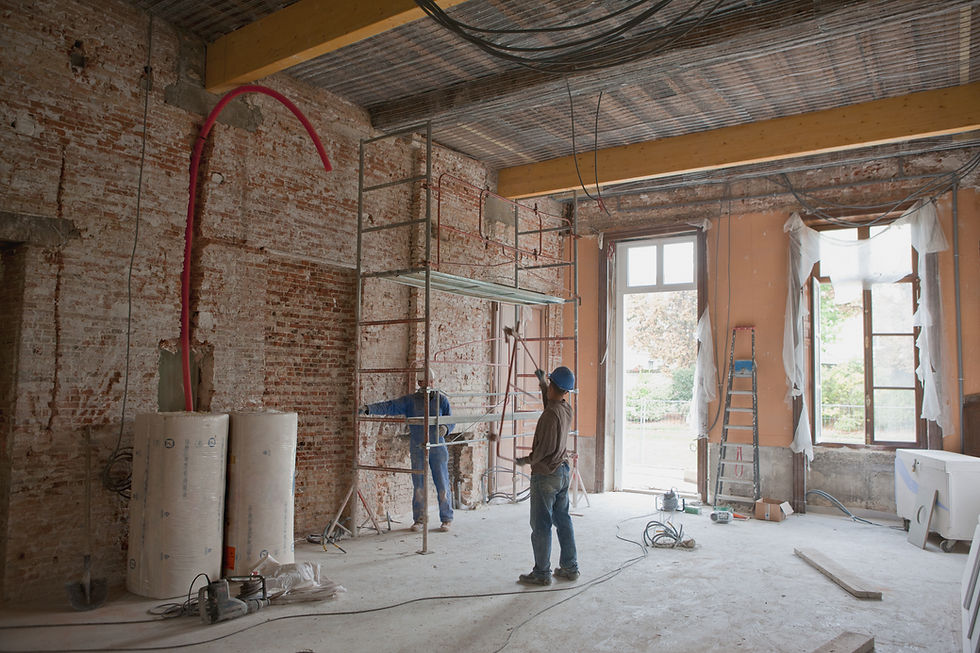
A development strategy should not end when the refurbishment is complete.
The exit strategy should be considered from the beginning.
Depending on the project, an investment may be positioned around a range of potential outcomes, such as retaining a completed asset for rental income, refinancing, selling individual units or pursuing another appropriate exit route.
The right strategy depends on the specific project, market conditions, funding structure and investor objectives.
This is why DBR Investment Group approaches development as an end-to-end process rather than treating acquisition and refurbishment as separate activities.
At Standish Court, the development process is designed around creating a finished property that can be positioned appropriately within its target market.
For investors, this means the conversation is not simply:
"Can we buy this property?"
It becomes:
"Can we acquire, develop and deliver this property successfully, and what is the most appropriate strategy for the completed asset?"
That broader perspective is central to identifying quality UK property development opportunities.
What Makes Standish Court Relevant to Today's Investors?
The property market continues to present opportunities for investors who are prepared to look beyond conventional completed-property purchases.
Some properties require refurbishment. Others require repositioning or more significant development intervention.
The challenge is finding opportunities where the potential upside justifies the complexity and risk involved.
Standish Court demonstrates DBR Investment Group's approach to this type of opportunity: assess the asset, understand the development requirements, manage the refurbishment and construction process, and work towards a clearly defined end product.
For private investors, the attraction is not simply the building.
It is the potential to participate in a professionally managed development opportunity where value creation is driven by a defined development strategy.
However, investors should always carry out their own independent due diligence and consider factors including market conditions, development costs, funding arrangements, taxation, legal structure and investment risk before committing capital.
Why DBR Investment Group Is Different from a Traditional Estate Agent
When researching UK property development opportunities, investors may encounter content from estate and letting agencies as well as specialist developers.
The distinction is important.
Traditional estate agents and letting agents can provide valuable market knowledge, property marketing, and sales or lettings services. However, their business model is fundamentally different from that of a property developer responsible for delivering a development.
A genuine development case study requires more than describing a property market.
It requires evidence of a project journey: an opportunity, a development strategy, refurbishment or construction activity, project management and a completed or progressing asset.
This is the gap DBR Investment Group aims to occupy.
Rather than simply reporting on property opportunities, DBR Investment Group operates directly in the development process.
Standish Court therefore provides investors with a practical example of how DBR Investment Group approaches property development, from identifying the opportunity through to managing the transformation.
Exploring UK Property Development Opportunities with DBR Investment Group
For investors seeking opportunities beyond conventional property purchases, development can offer a different route to potential value creation.
But development is not passive in the same way as purchasing a completed investment property. It involves additional variables, including construction, planning, costs, programme, market demand and execution.
The development partner therefore matters.
DBR Investment Group's approach is built around identifying opportunities, assessing their potential and managing the process required to turn them into completed property assets.
Standish Court demonstrates this approach in practice.
From the original property through to refurbishment and development, the focus is on creating a commercially viable finished asset rather than simply acquiring property and waiting for market appreciation.
For private investors, this provides an opportunity to evaluate not just the property itself, but the development strategy and team behind it.
Looking for Property Development Opportunities in the UK?
If you are a private investor looking for UK property development opportunities, the first step is understanding the opportunity properly.
What is being acquired?
What value can be added?
What development work is required?
Who is responsible for delivering it?
What are the projected costs?
And what is the intended exit strategy?
These are the questions that should sit behind every serious development investment decision.
Standish Court provides an example of how DBR Investment Group approaches these questions in practice.
If you would like to understand the project in greater detail, request the Standish Court development pack for further information about the development, investment opportunity, and project strategy.
Interested in exploring current UK property development opportunities?
Request the Standish Court development pack and speak with the DBR Investment Group team about the project and how private investors can participate in suitable property development opportunities.
Investment disclaimer: Property investment and development involve risk, and returns are not guaranteed. Any projected returns, valuations or investment outcomes should be treated as indicative and subject to the assumptions and risks set out in the relevant development documentation. Investors should undertake their own independent financial, legal and tax advice before making an investment decision.


